The Science of Why Coloring Calms Your Anxious Brain
You've probably heard that adult coloring books are "relaxing." But what's actually happening inside your brain when you pick up a colored pencil and start filling in a mandala? The answer goes deeper than simple distraction — and understanding the science can help you use coloring far more effectively as a stress-management tool, rather than just a pleasant pastime.
Your Brain on Repetitive, Predictable Patterns
Most adult coloring pages feature repetitive geometric shapes, symmetrical mandalas, or intricate botanical patterns. This isn't just an aesthetic choice — repetition matters neurologically. When you engage in a predictable, low-stakes repetitive motion like shading in similar-sized sections, your brain shifts out of its threat-detection mode and into what researchers call a "flow-adjacent" state.
This happens because repetitive tasks reduce activity in the amygdala, the brain's alarm system responsible for triggering fight-or-flight responses. Unlike scrolling social media (which delivers unpredictable, variable rewards that keep your nervous system on alert), coloring offers steady, low-arousal stimulation. Your brain essentially learns, page by page, that it's safe to relax.
Why This Differs From Other "Relaxing" Activities
Watching TV also feels relaxing, but it's passive — your brain absorbs information without producing anything. Coloring is different because it combines gentle sensory input (color, texture, sound of pencil on paper) with active, hands-on output. This dual engagement is closer to what therapists call "bilateral stimulation," a mechanism also used in certain trauma therapies, because it occupies both hemispheres of the brain simultaneously.
The Attention-Narrowing Effect
Anxiety often stems from your mind jumping between past regrets and future worries. Coloring forces your attention into a very narrow, present-focused channel: this line, this color, this stroke. Psychologists refer to this as an "attentional bottleneck" — when your working memory is occupied by a simple visual-motor task, there's less bandwidth left over for anxious rumination.
This is why many people describe coloring as "meditative" even if they've never meditated a day in their life. You don't need to know breathing techniques or mindfulness jargon to get the benefit — the activity does the mental narrowing for you.
Practical Tip: Choose Complexity Based on Your Stress Level
- High anxiety or racing thoughts: Choose highly intricate designs with lots of small sections. The complexity demands more attention, which more effectively crowds out worry.
- Low energy or fatigue: Choose simpler, larger patterns. Overly complex pages can feel frustrating rather than soothing when you're already depleted.
- Restless or fidgety: Try pages with continuous flowing lines (like paisley or wave patterns) that let your hand move in longer, smoother motions.
Color Choice Isn't Just Decorative — It's Emotional Regulation
There's a reason you might reach for blue and green pencils on a hard day and bright orange or yellow on a good one. Color psychology research suggests that selecting colors — even subconsciously — can serve as a form of emotional expression and regulation. The simple act of deciding "this section needs to be teal, not red" gives your brain a tiny, safe decision-making task, which can rebuild a sense of control when anxiety makes everything else feel unpredictable.
Try This: The Mood-Palette Exercise
- Before you start coloring, pick 3-5 colors without overthinking it.
- Color an entire page using only those colors.
- Afterward, glance back at your choices. Cooler, muted tones often reflect a need for calm; bold, saturated tones often reflect energy you want to channel.
This isn't about diagnosing your emotions — it's simply a gentle way to notice patterns in what your mind gravitates toward when it's given creative freedom.
The Physiological Side: What Happens to Your Body
Stress isn't only mental — it shows up physically as elevated heart rate, shallow breathing, and muscle tension. Several small studies on coloring and relaxation have found measurable drops in cortisol (the primary stress hormone) after just 20-30 minutes of focused coloring, similar to the effects seen with light meditation practices.
Part of this comes from posture and breathing. When you're hunched comfortably over a coloring page, your breathing naturally slows and deepens compared to the shallow breathing associated with screen use or multitasking. The physical stillness required to color within the lines quietly trains your body toward a parasympathetic ("rest and digest") state.
Making Coloring an Actual Stress-Relief Ritual (Not Just a Hobby)
To get genuine therapeutic benefit rather than just casual enjoyment, treat your coloring sessions with a bit of intention:
- Set a consistent time: Even 10-15 minutes before bed or during a lunch break trains your brain to associate coloring with the transition into calm.
- Remove multitasking: Put your phone in another room. The stress-reducing effect relies on singular focus — dividing attention with notifications cancels much of the benefit.
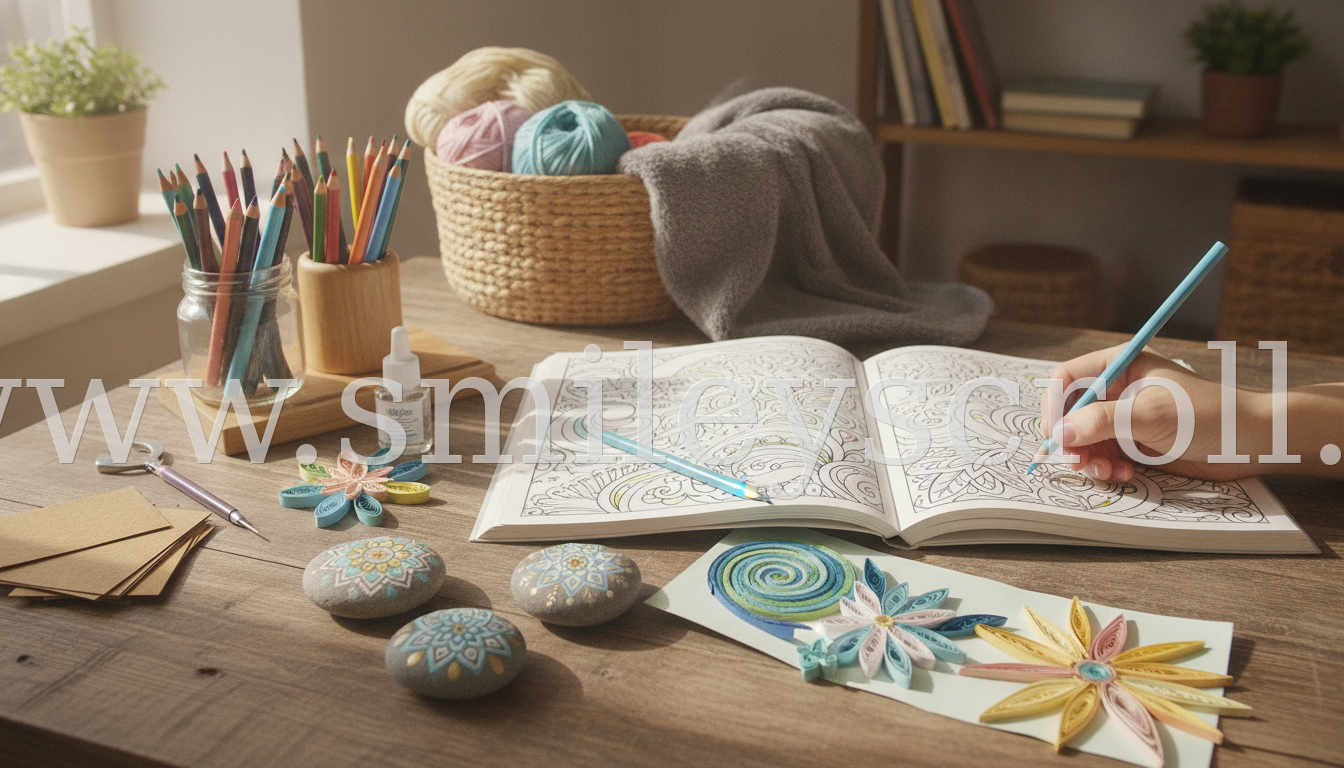
- Use quality tools: Pencils or markers that glide smoothly reduce the small frustrations (skipping ink, breaking tips) that can undercut the calming effect.
- Don't aim for perfection: Coloring outside the lines occasionally is fine — the goal is nervous system regulation, not gallery-worthy art.
- Pair with breath awareness: Try inhaling for four strokes and exhaling for four strokes to layer in a light breathing exercise without needing to "meditate" separately.
Who Benefits Most?
While anyone can enjoy coloring, it tends to be especially helpful for people who find traditional meditation difficult to sit still for, those recovering from burnout, and individuals looking for a screen-free wind-down activity in the evening. It's also frequently used alongside therapy for anxiety, though it's a complement to professional support rather than a replacement for it.
Conclusion
Adult coloring books work as stress relief not because they're a trendy hobby, but because they tap into real neurological and physiological mechanisms — narrowing attention, lowering amygdala activity, encouraging deeper breathing, and offering safe, low-stakes decision-making through color choice. The next time you sit down with a coloring page, know that you're not just filling in shapes — you're actively training your nervous system toward calm, one stroke at a time.